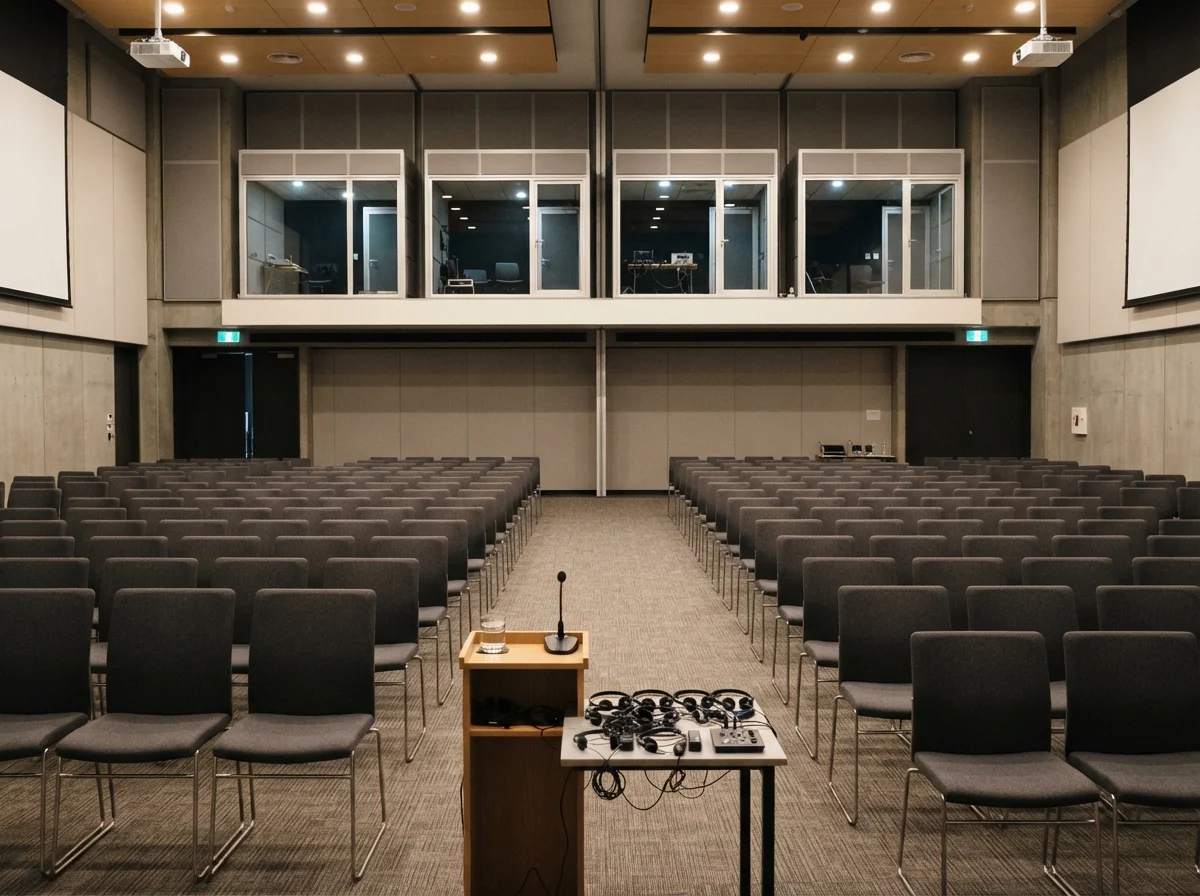
French remains one of the main working languages of international organisations, trade fairs, diplomatic meetings and industry summits, and organisers who host French speaking delegates need interpreting that works on the day without a pause. Conference interpreting is a skilled profession, because the interpreter must listen, understand and speak in another language almost at the same time while handling accents from France, Belgium, Switzerland, Canada and Africa, technical terms and the pace of a live room. Organisers who treat it as a last minute purchase often face poor sound, tired interpreters or speakers who forget to pause, and the audience pays for these mistakes. A French conference runs smoothly when the organiser books a team in advance, shares speaker notes and slides early and provides proper booths or a good remote platform. This guide explains the main modes, the equipment and the briefing that make the difference for trade fairs and summits.
Choosing the mode and the team
Simultaneous interpreting suits large rooms and keynote sessions, with interpreters working in pairs and swapping every twenty to thirty minutes. Consecutive interpreting suits small meetings, press talks and site visits. An organiser who needs French translation services for a summit should state the number of days, the languages, the rooms and the type of sessions at the first request, because a full day needs at least two interpreters per language and a long programme may need more.
Equipment, sound and documents
Interpreters need a quiet booth or a certified remote platform, a clear audio feed, a good microphone for every speaker and a clear view of the stage or the screen. Share programmes, speaker lists, slide decks and glossaries a week before the event. For translation from French to English and from English to French of printed material such as badges, signs and brochures, order the texts early so that terms in the room match the terms used by interpreters.
On the day and after the event
Ask speakers to talk at a steady pace, to read figures slowly and to avoid jokes that only work in one language. Give interpreters water, breaks and a contact person who solves technical issues. After the event, collect feedback from delegates, store the glossary and ask the interpreters for notes on terms that caused trouble. Review costs against the plan, including travel, equipment and extra hours, so the next budget is more accurate and the French speaking guests receive the same quality every time.
How long does translation take
To plan your timeline for written material before an event, read our article on how long a translation takes which explains the factors that decide delivery time and how to avoid delays.
Checking the translation before you submit
Before you send the file, compare every name, number and date with the source, and confirm that stamps and handwritten notes are marked in brackets. Ask the translator to fix any slip at no charge and to supply the signed statement with their name and credentials. A short final check can save weeks of delay with an office that rejects documents for small errors.
Quotes, deadlines and revisions
Ask for a written quote that lists word count, certification, delivery date and the number of review rounds included. Share deadlines early, because certified copies and long contracts need extra time. Agree how corrections are requested, and keep one contact person on your side so that feedback reaches the translator in one clear message.
Certification and legalisation
Offices abroad may require a certified translation and an apostille or attestation on the original paper. Ask what they accept in writing, order the certificate with the translation and keep scans of every stamped page. Plan extra days when several offices must stamp the same file.
Interpreting for meetings and hearings
French interpreters support business negotiations, clinics, immigration interviews and court hearings. Share names, dates and a short agenda in advance, and avoid using children as interpreters, because accuracy and privacy both suffer.
Machine translation and review
Machine tools give a quick gist of French text, but they often mishandle names, idioms and formal registers. Use them for rough understanding only and ask a native reviewer to check anything that will be submitted or published.
Storing your approved terms
After the first project, save approved names, titles and product terms in a short glossary and send it with every new order. Reuse of approved wording keeps documents consistent over months and lowers the cost of later projects.
Confidentiality and files
Send documents through a secure channel, share only what is needed and ask who will handle the files. Return all drafts in the same format as the original so that tables and stamps stay in place.
Working with a project manager
For larger orders, ask for one project manager who tracks files, deadlines and questions from the translator. A named contact removes confusion, keeps versions in order and gives you one person to call when a reviewer or an office changes the request.
Where to read more
For a neutral overview of the history, grammar and use of the language, see the Wikipedia article on French language , which also covers its dialects, its history and its status as an official language in many countries.